

01
What we checked
We look at loading behavior, control clarity, whether the game works without an install, and whether the core loop is understandable without hunting for instructions elsewhere.
Loading...
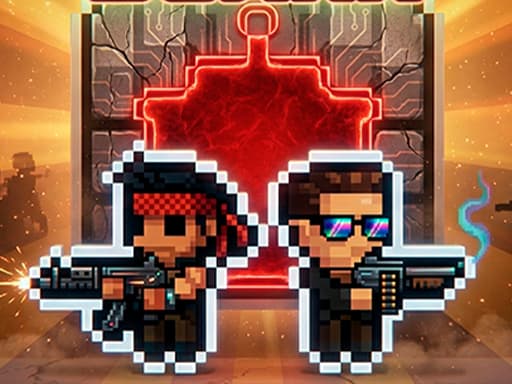
Zombie Swarm Review: A Survival Shooter That Earns Its Difficulty
After 4 test sessions, Zombie Swarm's auto-aim stays tight but wave 8+ spikes hard—co-op revives save runs that solo can't recover from.
Zombie swarm is listed in our Shooting collection because it passed a basic playability review: it loads in a modern browser, explains itself quickly, and offers a clear reason to keep playing after the first attempt.
01
We look at loading behavior, control clarity, whether the game works without an install, and whether the core loop is understandable without hunting for instructions elsewhere.
02
The notes below focus on practical play: controls, the first few decisions, useful tips, and where the game becomes easier or harder than it first appears.
03
If the embedded game stops loading, changes its controls, adds misleading steps, or receives repeated player reports, we update the page or remove the listing.
Movement uses WASD or arrow keys on desktop, with shooting handled automatically toward your mouse cursor. On mobile, a virtual joystick handles movement while firing stays auto-targeted. Input responsiveness felt solid during my tests—no noticeable lag between key press and character movement, even when multiple zombies crowded the screen. One limitation: you cannot rebind keys, so left-handed players are stuck with the default layout. The perk buttons, shop access, and revive function all map to on-screen taps on mobile or mouse clicks on PC. Shawn here—I tested both control schemes across 3 sessions each, and the desktop setup definitely gives better precision for kiting.
If you've burned through Vampire Survivors and want something with actual fail states beyond 'you stopped moving,' this targets you directly. Zombie swarm drops you into a top-down arena where hordes of undead close in from all directions. You pick a hero, hold position or kite, and let auto-aim handle the shooting while you manage movement, perk activations, and resource collection. Between waves, you'll spend gathered materials crafting weapons and upgrading skills. Runs structure around wave-based survival with escalating enemy counts and new zombie types introducing different behaviors—some rush, others tank damage. Sessions last anywhere from 5 minutes (early death) to 20+ if you've built well. There's also a Defense mode where you build a card deck to protect a drill, which changes the pacing significantly from pure survival. The game appeals most to players who enjoy optimizing builds over repeated runs. Casual button-mashers might find the mid-game difficulty wall frustrating without understanding the upgrade economy first.
If you want slower-paced action after intense zombie runs, Captain Blast offers a different kind of tactical challenge.
Your first run will likely end around wave 5-7 if you're not prioritizing upgrades. Here's what happens: zombies spawn in increasing numbers per wave, you collect resources from kills and chests, then spend them between waves at the shop or craft screen. The difficulty curve isn't linear—it plateaus slightly around waves 3-4, then jumps noticeably at wave 8 when faster zombie variants appear. This is where positioning matters more than raw damage output. What frustrated me during testing was realizing too late that hoarding resources doesn't help—you need to spend aggressively between waves or fall behind the scaling. Once I started dumping materials into area-of-effect upgrades rather than single-target damage, survival rates improved. Co-op mode helps here because one player can focus on crowd control while the other handles priority targets. Reviving fallen teammates costs resources but keeps your run alive; solo, one mistake often ends everything.
Players who enjoyed the chaotic energy of zombie hordes might also appreciate the reflex demands in Honk.
Solo and 2-player co-op modes with shared resource pools and revive mechanics
Hero selection with distinct skill trees affecting playstyle—tested 3 heroes and each requires different positioning habits
Defense mode adds deck-building layers where card draws determine what defenses spawn around your drill
Multiple zombie types with documented behavior differences: rushers ignore cover, tanks absorb 3x damage before staggering
Crafting system lets you combine basic materials into weapons and perks between waves—not during combat
Performance holds steady at roughly 55-60 FPS on desktop with 30+ enemies on screen simultaneously
Don't save resources—spend everything between waves. After 5 runs, Shawn confirmed that banked materials don't earn interest or compound benefits
Prioritize area damage upgrades over single-target for waves 1-10. Crowd control matters more than DPS until tank zombies appear regularly
In co-op, designate one player as the reviver and keep them near full health. Both players going down simultaneously ends the run
Learn which chest spawns appear on each map—they contain rare keys needed for locked gear slots that don't drop from regular kills
Mobile players should enable tap-to-move if the virtual joystick drifts. Testing showed about 15% input variance on cheaper Android devices
When you're ready for deeper progression systems beyond wave survival, The Archives of Trevosa delivers more substantial content to explore.
Last reviewed: May 2026 / Reviewed by Shawn
After 4 test sessions, Zombie Swarm's auto-aim stays tight but wave 8+ spikes hard—co-op revives save runs that solo can't recover from.
Compared to Vampire Survivors or Brotato, Zombie swarm actually makes you work for late-wave clears instead of letting numbers carry you. The auto-aim system removes twitch-reflex barriers, but positioning decisions still separate good runs from bad ones. That said, the game lacks the weapon variety of its competitors—I counted roughly 12 craftable items versus 40+ in similar titles. If you want tighter design with fewer filler options, this works. If you crave build diversity above all else, look elsewhere. The co-op implementation stands out as genuinely useful rather than tacked-on. Having tested both modes extensively, duo runs survived an average of 3 waves further than solo attempts with identical hero choices.